
Parkland, FL
Pool Service in Parkland, FL
Weekly pool care across a city that spent its first decade with more horses than people, and still zones for that character today.
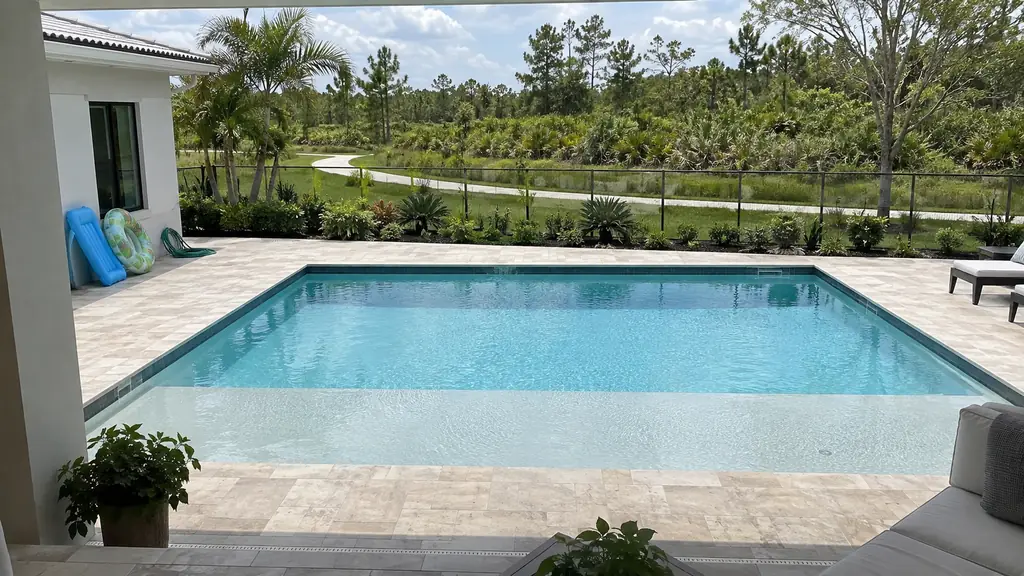
A backyard swimming pool at a home in Parkland, FLLocal conditions
What actually affects a pool in Parkland.
A working horse pasture on one lot, a lake glinting behind a gated golf-course fence at the next. Parkland was incorporated in 1963 after local rancher Bruce Blount, who had been running cattle on land he called BBB Ranches, got a bill through the Florida legislature to charter the town. He became its first mayor. The name was chosen deliberately to describe an undeveloped, park-like place set apart from the building boom already underway elsewhere in Broward County, and for its first decade, horses genuinely outnumbered residents.
That rural, low-density character held by design. Parkland kept large-lot zoning and resisted commercial development well past the point where its neighbors had built out, and the city didn't get its first traffic light or retail strip until the 1990s and 2000s, decades after incorporation. Heron Bay and Parkland Isles, both built in that same stretch, brought the city's first large-scale planned communities, with lakes, golf and gated HOAs.
The result is a city where new, larger-format construction sits close beside working equestrian lots that predate it by decades, and a pool in one is rarely the same job as a pool in the other.
- A meaningful share of large equestrian and acreage lots, a holdover from the ranch land the city was built on, with more open ground and heavier landscaping load around the pool.
- Newer, larger planned communities like Heron Bay and Parkland Isles, built from the mid-1990s through the 2000s around lakes and golf courses.
- Lake-front lots common in the newer communities, with a steadier waterfowl and debris load than an interior lot.
- A wet season from roughly May through October that dilutes chemistry and pushes yard runoff toward the water.
- A long, bright dry season the rest of the year that burns through chlorine faster in an uncovered pool.
- A city built out later and more slowly than its neighbors, so most equipment here is newer on average, though the oldest ranch properties are the exception.
Every visit
What weekly service covers in Parkland.
A horse property with open pasture and a lakefront pool in a gated golf community are not the same job. Across regular service, that work covers:
- Chlorine and pH balancing, read against the week's heat, rainfall and how much the pool has been used.
- Brushing walls, steps and benches, where algae gets started long before the water looks any different.
- Vacuuming scaled to what has actually settled, which runs heavier on lake lots and acreage properties.
- Waterline tile cleaning, adjusted for plaster, stone or glass finishes.
- Clearing skimmer and pump baskets so circulation keeps pace with what blows in off nearby water.
- Filter pressure checks, with a backwash or a cleaning when the reading calls for it.
- Inspecting the pump, filter, heater, salt cell and automation at the equipment pad.
- Watching the water level and the shell for the early signs of a structural problem.
Routine balancing chemicals are included unless the approved quote says otherwise. You get a written report after every visit with your readings, what was handled and a photo.
Cost
What pool service costs in Parkland.
Weekly pool care starts at $95 a month. Most standard residential pools land between $95 and $189, and the exact figure is confirmed before service begins, so the price you approve is the price you pay.
Three things move the number:
- The size of the pool, measured from satellite imagery rather than estimated.
- How much tree cover sits over the water.
- Whether there is a sun shelf or tanning ledge.
Give it an address and the real number for your pool comes back in about a minute.
Neighborhoods
Neighborhoods and pool types across Parkland.
A city where new, gated, lake-oriented construction sits close beside the working ranch land it grew up around.
Heron Bay
A large guard-gated community built around a golf course beginning in the mid-1990s. Lake-front lots are common, and equipment is generally still within its first full service life.
Parkland Isles
A gated, lake-oriented community built in the same wave as Heron Bay. Similar profile: newer equipment, but a steady waterfowl and debris load off the lakes.
The equestrian and acreage properties
Large-lot, horse-zoned properties that carry Parkland's original ranch-land character. Pools here take a heavier landscaping load and sit further from the street than in the planned communities.
Parkland's newer construction toward the county line
The most recently built sections of the city, where equipment is typically still on its original systems.
The original town core
The oldest developed part of the city, predating Heron Bay and Parkland Isles by decades, with correspondingly older equipment where it hasn't already been replaced.
Repairs and equipment
Repairs, equipment and leak detection in Parkland.
Because most of Parkland's housing stock, including Heron Bay and Parkland Isles, dates to the mid-1990s or later, equipment across the city runs newer on average than in Broward's older inland cities. The exception is the working ranch and acreage properties that predate the planned communities, where a full replacement is more often already overdue.
Leak detection starts with an inspection and a diagnosis, and the pricing is confirmed before any repair work begins.
Worth a call before it turns into a repair:
- The water level dropping faster than a hot dry week on its own explains.
- Chlorine demand climbing week over week while use and weather stay the same.
- Air at the return jets, or a pump that keeps losing prime.
- Ground that stays soft or damp near the equipment pad, the deck or the pool shell.
- A heater that short-cycles, or a salt cell reading low while the water itself tests fine.
- Water that will not clear no matter how the chemistry is adjusted.
Questions
Common questions in Parkland.
Weekly is the right baseline here. Between the wet season diluting chemistry, the dry season burning off chlorine, and the lakes running through the newer communities, a two-week gap is usually long enough for water to move out of balance and for algae to get a start.
It starts at $95 a month, and most standard residential pools land between $95 and $189. Pool size is the biggest factor, then tree cover and whether the pool has a sun shelf. Routine balancing chemicals are included, and the exact figure is confirmed before service begins, so the price you approve is the price you pay.
It changes what gets watched more than what gets charged. Open pasture and larger lots bring more organic debris into a pool than a standard yard, so vacuuming and filter checks get more attention. Pricing still comes from pool size, tree cover and whether there's a sun shelf.
Yes, common across both Heron Bay and Parkland Isles and the equestrian properties. Weekly care covers the pool and the equipment pad. Repairs, equipment work and automation are quoted separately, after an assessment of what is already installed.
Heavy rain dilutes the chemistry and pushes debris toward the water, and on lake-front lots that runoff has somewhere to go but often carries more with it. A pool left in that state turns green quickly in Florida heat. Storm cleanup beyond the normal weekly visit is quoted separately, based on what the pool actually needs once the weather clears.
No. Service is month to month, with no term to sign.
Routes run from the equestrian and acreage properties that carry the city's original character through Heron Bay and Parkland Isles to the newer construction toward the Palm Beach County line. Service is route-based, so the exact street still decides it, and the fastest way to know is to enter the address.
Nearby: pool service in Coral Springs, pool service in Coconut Creek. See every service area.
Ready to enjoy the Blu in Parkland?
Enter your address and get an answer in seconds.
Fully insured for residential pool service.