
Pembroke Pines, FL
Pool Service in Pembroke Pines, FL
Weekly pool care across Pembroke Pines, from the lake communities out west to the older neighborhoods on the east side.
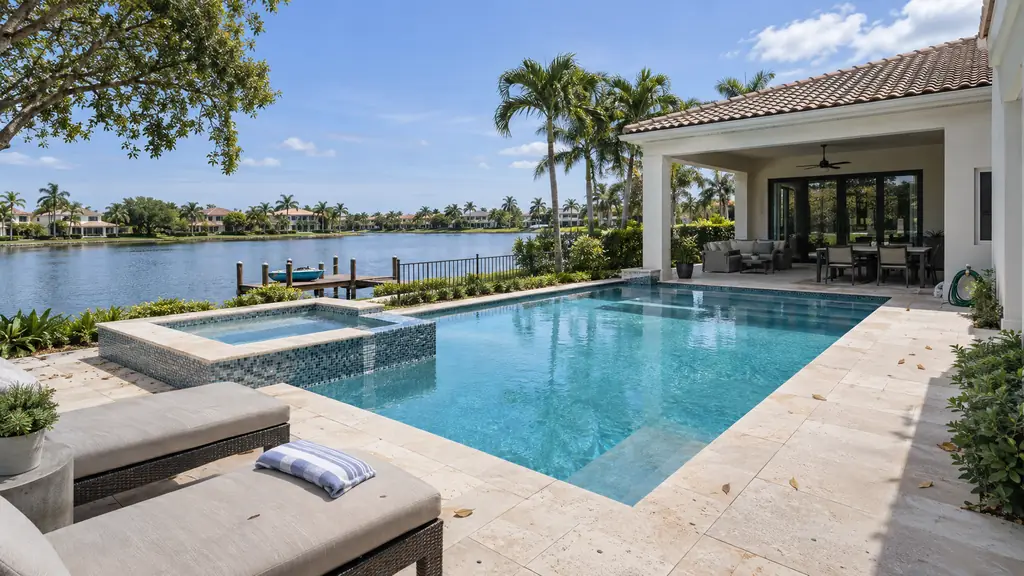
A backyard swimming pool at a home in Pembroke Pines, FLLocal conditions
What actually affects a pool in Pembroke Pines.
A screened enclosure holding onto the day's humidity, a lake glinting behind the back fence, oak leaves already settling on the water by the time anyone's home from work. Pembroke Pines sits inland, and that one fact changes what a pool here needs. There is no ocean air working on your equipment the way there is out on the coast. What there is instead is water almost everywhere, from the lake at C.B. Smith Park to the canal network draining the western neighborhoods, along with a wet season that runs half the year and a long bright dry season that burns through chlorine faster than most people expect.
The city also grew fast, and it grew westward along Pines Boulevard. Pembroke Pines went from farmland to the second-largest city in Broward County over the half-century that followed, and the master-planned communities built through the 1980s, 90s and 2000s brought a particular kind of pool with them: a screened enclosure, a lake behind the house, and an HOA with an opinion about how the yard looks. East of Flamingo Road the housing runs older, with mature tree canopy overhead and pools already on their second or third set of equipment.
That split is the whole story of pool care here. A screened pool on a lake in Chapel Trail and an open-air pool under oaks in Pasadena Lakes are two different jobs, even though they are eight miles apart in the same city.
- Lakes and canals behind a large share of homes, part of the drainage network the city maintains with the South Broward Drainage District, bringing steady organic debris and waterfowl traffic.
- Screened enclosures on many newer-community pools, which cut the leaf load but hold humidity, shade the water and shed their own fine debris.
- Mature tree canopy across the older eastern neighborhoods, where leaf and seed drop runs heavier and more constantly than the newer west side sees.
- A wet season from roughly May through October, when heavy rainfall dilutes chemistry and pushes yard runoff toward the water.
- A long, bright dry season with little cloud cover, which burns off chlorine faster in open-air pools.
- High household use in family neighborhoods, which raises bather load and the demand on sanitizer through summer and school holidays.
Every visit
What weekly service covers in Pembroke Pines.
The pool sets the priorities. A dry month in Chapel Trail and the week after a storm in Pasadena Lakes call for different work. Across regular service, that work covers:
- Chlorine and pH balancing, set against the week's heat, rainfall and bather load.
- Brushing walls, steps and benches, where algae takes hold before it ever shows in the water.
- Vacuuming matched to the debris load, which runs heavier under the older canopy east of Flamingo Road.
- Waterline tile cleaning, adjusted for plaster, stone or glass finishes.
- Clearing skimmer and pump baskets so circulation keeps up with what the lakes bring in.
- Filter pressure checks, with a backwash or a cleaning when the reading calls for it.
- Inspecting the pump, filter, heater, salt cell and automation at the equipment pad.
- Watching the water level and the shell for the early signs of a structural problem.
Routine balancing chemicals are included unless the approved quote says otherwise. You get a written report after every visit with your readings, what was handled and a photo.
Cost
What pool service costs in Pembroke Pines.
Weekly pool care starts at $95 a month. Most standard residential pools land between $95 and $189, and the exact figure is confirmed before service begins, so the price you approve is the price you pay.
Three things move the number:
- The size of the pool, measured from satellite imagery rather than estimated.
- How much tree cover sits over the water.
- Whether there is a sun shelf or tanning ledge.
Give it an address and the real number for your pool comes back in about a minute.
Neighborhoods
Neighborhoods and pool types across Pembroke Pines.
Two pools a few miles apart in this city can need meaningfully different attention. These are the patterns that drive it.
Chapel Trail and the western edge
Out near the Chapel Trail Nature Preserve, roughly 450 acres of protected wetland, pools sit closer to open wetland than most of the city. Expect more wind-carried organic debris, more insect activity and more bird traffic across the water, especially through the wet season.
Silver Lakes and Towngate
Silver Lakes was laid out around water, and anywhere in this part of the city a lakefront lot means a constant fine film of pollen, grass and organic matter on the surface. Skimming and circulation matter more here than raw chemical dosing, because algae pressure builds quickly when flow is not keeping up.
Pembroke Falls, Grand Palms and Pembroke Isles
Gated, master-planned and newer, these are where the more complex setups tend to sit: pool-and-spa combinations, automation panels, variable-speed pumps and salt systems. There is more to check at the equipment pad, and HOA standards mean the deck and cage are judged alongside the water.
Pasadena Lakes, Pembroke Lakes and the older east side
Closer to the Hollywood line, the housing stock runs older and the canopy runs heavier. Pools here often have aging surfaces, original plumbing runs and equipment that has been replaced piecemeal over the years, so a weekly visit is as much about catching wear early as it is about water clarity.
Screened enclosures and open-air pools
This is the single biggest difference between two otherwise identical Pembroke Pines pools. A screened pool takes in far less leaf debris but sits shaded and humid, collects pollen and screen grit, and holds chemistry differently. An open-air pool takes the full sun, loses chlorine faster and catches everything the wind brings.
Repairs and equipment
Repairs, equipment and leak detection in Pembroke Pines.
Being inland spares equipment the salt corrosion that shortens pump and heater life closer to the coast. What it does not spare is age. A pool built when Chapel Trail or Silver Lakes went up is now decades old, which usually means a second or third generation of pump, a heater that has been replaced at least once, and plumbing that has been patched rather than replaced.
Water loss is also harder to read on a lake lot. Rain, evaporation and a sprinkler zone pointed the wrong way can all look like a leak, and a real leak can hide underneath a rainy week. Leak detection starts with an inspection and a diagnosis, and the pricing is confirmed before any repair work begins.
Worth a call before it becomes a repair:
- The water level dropping faster than evaporation alone explains, especially in the dry season.
- Chlorine demand climbing week over week with no change in use or weather.
- Air bubbles at the return jets, or a pump that keeps losing prime.
- Ground that stays damp or feels soft near the equipment pad, the deck or the pool shell.
- Cracking or lifting deck pavers around one section of the pool.
- Water that will not clear no matter how the chemistry is adjusted.
Questions
Common questions in Pembroke Pines.
Weekly is the right baseline here. Between the wet season diluting chemistry, the dry season burning off chlorine and the organic load coming off lakes and tree canopy, a two-week gap is usually long enough for water to move out of balance and for algae to get a start.
It starts at $95 a month, and most standard residential pools land between $95 and $189. Pool size is the biggest factor, then tree cover and whether the pool has a sun shelf. The exact figure is confirmed before service begins, so the price you approve is the price you pay.
Less leaf debris, yes. Less service, no. Screened pools sit shaded and humid, collect pollen and fine grit off the screen itself, and hold heat and chemistry differently than an open pool. They need the same weekly attention, just aimed at different things.
It adds a steady supply of organic material to the surface and more wildlife traffic across the water, and it makes water loss harder to interpret, since rain and evaporation swings can look like a leak. It does not change the price on its own. Pool size and condition drive that.
Yes. Weekly care covers the pool and the equipment pad. Repairs, equipment work and automation are quoted separately, after an assessment of what is already installed.
Heavy rain dilutes chemistry and pushes yard debris and runoff into the water, and a pool left that way turns green quickly in Florida heat. Storm cleanup beyond the normal weekly visit is quoted separately, based on what the pool actually needs once the weather clears.
No. Service is month to month, with no term to sign.
Routes run across the city, from the Dykes Road and Sheridan Street corridors in the west through to the older neighborhoods near the Hollywood line. Chapel Trail, Silver Lakes, Towngate, Pembroke Falls, Grand Palms, Pembroke Isles, Pasadena Lakes and Pembroke Lakes are all inside the area served. Service is route-based, so the exact street still decides it, and the fastest way to know is to enter the address.
Nearby: pool service in Miramar, pool service in Cooper City. See every service area.
Ready to enjoy the Blu in Pembroke Pines?
Enter your address and get an answer in seconds.
Fully insured for residential pool service.